Northern Michigan Waterfront Valuation Authority
Torch Lake Real Estate: Why Some Areas Sell for Significantly More
By Brick & Corbett Real Estate. Analyzing shoreline quality, sunset premiums, frontage types, EGLE permitting, and corridor-level valuation drivers across Antrim County.
Torch Lake Valuation Drivers Summary
Property values on Torch Lake (median list prices near $1,000,000 to $5,000,000+ for showpiece estates) are dictated by four physical and legal drivers: 1) Sunset Premium: West-facing lots on the northeast and east shorelines (Kewadin & Alden) command a 40%+ premium over east-facing lots; 2) Frontage Class: True private waterfront with exclusive dock rights sells for significantly more than shared association access or deeded easements; 3) Shoreline Quality: Level sandy-bottom entry outperforms steep bluffs or mucky bottoms; and 4) EGLE Permitting & Septic: Verified Michigan Department of Environment, Great Lakes, and Energy (EGLE) permits for permanent hoists and verified septic capacity insulate long-term equity as of 2026.
Pricing or Selling a Property on Torch Lake?
Corridor-Level Valuation Precision Beyond Automated Estimates
Algorithmic online valuation tools fail to account for sandy bottom depth, dock rights, or the northeast sunset exposure window. Work with Brick & Corbett for exact local pricing clarity.
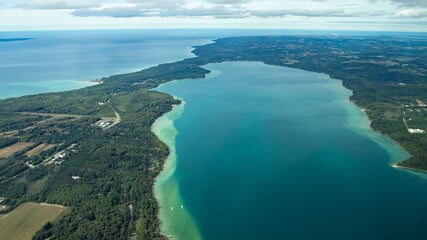
Though Torch Lake encompasses 41 miles of shoreline and roughly 1,500 private cottages, at any given moment, only about 30 properties are actively listed for sale. Within that tightly constrained inventory, median list prices hover near $1 million, while premier showpiece estates regularly list between $2 million and upwards of $10 million.
Why do two properties with similar square footage on the same lake sell for vastly different prices? Orientation, shoreline composition, dock rights, EGLE permit history, and geographical corridor position move Torch Lake property values in highly predictable, measurable ways. This guide breaks down the physical and legal variables that determine real estate pricing across Antrim County.
Torch Lake Frontage Tier Comparison Matrix
Comparative analysis of private waterfront vs. shared access vs. easement options on Torch Lake detailing valuation baselines, dock privileges, and resale liquidity.
Frontage Classification | Valuation Baseline | Dock & Hoist Privileges | HOA & Legal Governance | Resale Buyer Pool & Liquidity |
|---|---|---|---|---|
True Private Waterfront | $1,200,000 - $10,000,000+ | Exclusive private dock, boat hoist, & permanent mooring rights | Full riparian rights subject only to state EGLE permits | Maximum global buyer demand; fastest liquidity for prime lots |
Shared Association Waterfront | $600,000 - $1,200,000 | Shared park frontage; dock space often assigned or rotated | Governed by neighborhood HOA bylaws & shared maintenance fees | Moderate buyer pool seeking lower entry pricing & low maintenance |
Deeded Access Easements | $450,000 - $850,000 | Pedestrian water access; dock/mooring rights rarely permitted | Deed-restricted access corridors across third-party private land | Smaller buyer pool; requires thorough real estate attorney review |
Physical & Legal Variables Moving Torch Lake Values
1. Shoreline Composition & Lake Bottom
Sandy bottom frontage with a gradual, gentle slope into the turquoise water commands the highest premium on Torch Lake. A 100-foot sandy shoreline outperforms a 150-foot rocky, mucky, or drop-off shoreline on every appraisal metric because it provides direct swimming and safe boat docking.
2. Lot Topography & Elevation
Level or gently sloping lots between the access road and the shoreline are significantly more valuable than steep bluff lots. While bluffs provide elevated long-range views, they require extensive stair infrastructure and make daily lake and dock access physically demanding.
3. EGLE & Dock Permitting History
Shoreline modifications, sea walls, riprap installation, and permanent docks fall under the Michigan Department of Environment, Great Lakes, and Energy (EGLE) inland lakes program. Properties with pre-approved EGLE permits and clear dock histories eliminate buyer risk and command higher prices.
4. Septic System Capacity
Because Torch Lake parcels rely on private wells and drainfield septic systems, Health Department bedroom ratings dictate maximum expansion capacity. Parcels engineered and approved for 4+ bedroom septic systems sell at a premium over restricted 2-bedroom lots.
North vs. South & The West-Facing Sunset Premium
Geographical position on Torch Lake creates distinct lifestyle trade-offs that directly dictate market pricing.
The South End (Alden & Sandbar Area): Represents the social heart of Torch Lake. High-net-worth buyers prioritizing boating, sandbar gatherings, waterside dining, and quick connection through the Torch River into Lake Skegemog target this area. However, summer weekend boat traffic and higher noise levels represent a trade-off for buyers seeking peace.
The North End (Eastport Area): Offers larger land parcels, significant tree cover, lighter boat traffic, and profound quiet. It appeals to buyers prioritizing a secluded retreat over sandbar partying.
The Sunset Premium: East Shore vs. West Shore
Orientation is one of the most consistent—and frequently underestimated—value drivers on Torch Lake:
- West-Facing Shorelines (Northeast & East Shore / Kewadin & Alden): Capture all-day sunlight and panoramic evening sunsets directly across the widest axis of the lake. This orientation commands a 20% to 40% valuation premium.
- East-Facing Shorelines (West Shore): Offer brilliant early morning sun and calmer afternoon water shade, representing a smart value opportunity for buyers whose lake enjoyment skews early in the day.
About Brick & Corbett Real Estate
Brick & Corbett is a premier Northern Michigan real estate team specializing in luxury waterfront valuation, land development, and residential sales across Torch Lake, Old Mission Peninsula, Leelanau County, and Traverse City.
Valuation Expertise: Brick & Corbett provides clients with corridor-level comparative market analyses, evaluating EGLE dock compliance, bottom quality, and orientation premiums.
Related Torch Lake Real Estate Resources
Frequently Asked Questions About Torch Lake Property Values
Is Torch Lake a good long-term real estate investment?
Yes. Torch Lake's structural inventory constraints (around 30 active listings across 1,500 homes) combined with sustained demand from affluent cash buyers produce consistent long-term equity appreciation.
How long do properties typically stay on the market on Torch Lake?
Well-priced properties in desirable corridors, particularly on the northeast shoreline and near Alden, move quickly, often within days during peak season. Properties with steep bluff topography, mucky bottom frontage, or easement complications take longer and often require price adjustments.
What should buyers investigate before making an offer on a Torch Lake property?
Shoreline permit history through the Michigan Department of Environment, Great Lakes, and Energy (EGLE), confirmed dock/riparian rights, septic system capacity, and municipal short-term rental zoning are the four most critical due diligence items.
Why do west-facing Torch Lake properties command a price premium?
West-facing properties on the east shore (Kewadin and Alden) capture direct late afternoon sun and dramatic evening sunsets over Torch Lake's turquoise water, creating a 15% to 30% valuation premium over east-facing equivalents.
Get a Torch Lake Property Valuation From Brick & Corbett
Pricing a Torch Lake property accurately requires corridor-level knowledge that automated valuation tools consistently miss. Connect with Brick & Corbett for an exact market valuation.