By Brick & Corbett
Traverse City homes average just over 1,700 square feet, yet many households here are managing gear for ski equipment, paddleboards, trail bikes, and water sports equipment. The garage absorbs the overflow, and in a market where buyers evaluate every square foot, a disorganized garage consistently undermines a home's perceived value at the worst possible moment.
We see garage condition come up in buyer walkthroughs and seller preparations regularly, and this guide covers the home storage ideas and organizational strategies that make the biggest difference.
Key Takeaways
- Vertical space: Most garages are dramatically underutilizing wall and ceiling height, which is where the most impactful storage gains are made.
- Zoning: Dividing the garage into dedicated activity zones eliminates the daily chaos of searching for gear.
- Seasonal rotation: Traverse City's four distinct seasons require a storage system built around regular, predictable equipment swaps.
- Resale impact: An organized garage signals overall home maintenance quality to buyers and affects offer decisions in competitive situations.
Start With Vertical Storage
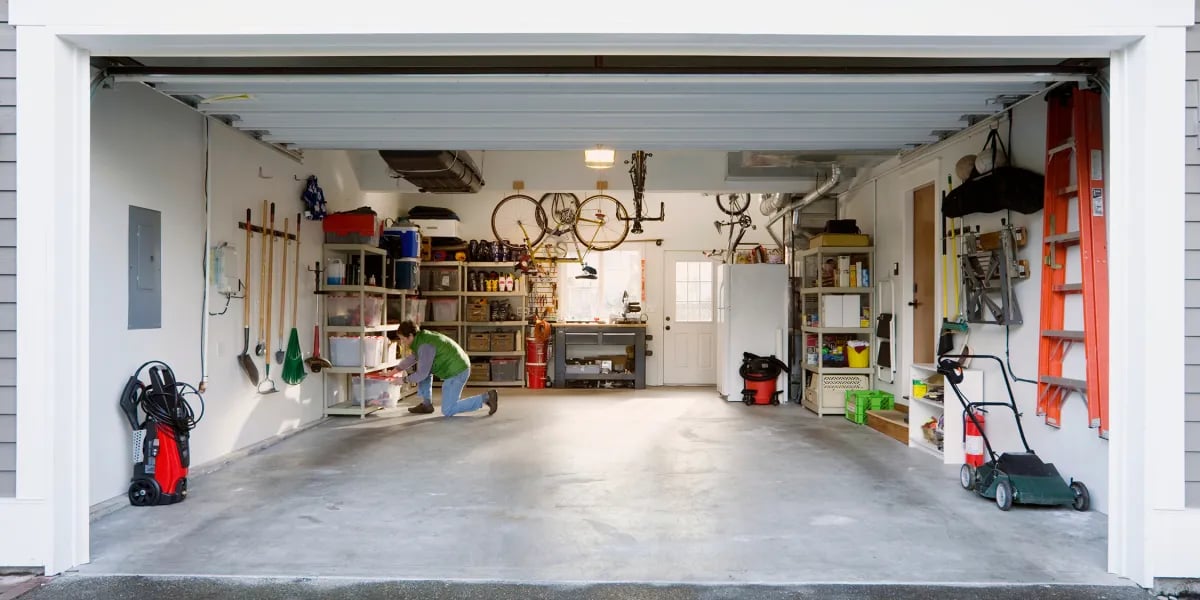
Most garages waste the majority of their available storage capacity. Floor space fills up quickly, but wall and ceiling space typically go unused entirely.
Vertical Storage Solutions Worth Installing
- Slatwall panels: Modular wall panels that accept interchangeable hooks, baskets, and shelves, allowing the storage configuration to change as seasonal gear rotates in and out.
- Overhead ceiling platforms: Ceiling-mounted storage racks installed above the garage door are ideal for storage bins, luggage, and seasonal items accessed infrequently.
- French cleat systems: A shop-standard wall system using interlocking angled cleats that supports heavy tools, cabinets, and custom holders at any position along the wall.
- Track-mounted bike hoists: Ceiling-mounted pulley systems lift bikes vertically, freeing floor and wall space for other gear categories without removing bikes from the garage entirely.
Garage organization Traverse City homeowners execute most successfully almost always starts on the walls and ceiling rather than the floor. Clearing the floor is the goal, not the starting point.
Create Dedicated Zones by Activity
An unzoned garage forces every search to cover the entire space. A zoned garage puts everything in a predictable location that every household member can find and return items to independently.
Practical Zone Categories for Traverse City Households
- Winter sports zone: A dedicated wall section or cabinet cluster for skis, poles, helmets, boots, and avalanche gear keeps winter equipment contained and accessible from November through March.
- Water sports zone: Paddleboards, kayak paddles, life jackets, and dry bags benefit from a defined wall section with appropriately sized hooks and a designated floor or ceiling rack for boards and hulls.
- Yard and garden zone: Grouping long-handled tools, such as hoses, fertilizers, and small power equipment, near the garage entry closest to the yard reduces carrying distance and keeps this category from spreading.
- Workshop zone: Even a modest workbench with pegboard tool storage above it concentrates project-related mess and keeps tools accessible without letting them migrate across the entire garage.
Home storage ideas that ignore zoning produce organized-looking garages that revert to chaos within weeks.
Build a System for Seasonal Rotation
Traverse City's four genuine seasons mean that garage contents change substantially four times a year.
Seasonal Storage Strategies That Work
- Labeled clear bins for off-season gear: Transparent bins with labeled contents let households identify and retrieve seasonal items without opening every container during a rotation.
- Tire storage wall mounts: Vertical tire racks mounted to the wall store a second set of seasonal tires without consuming floor space or requiring a separate storage unit off-site.
- Dedicated boot and helmet shelf: A fixed shelf at entry height near the garage door keeps the current season's footwear and head protection accessible without digging through bins.
- Annual purge calendar: Scheduling a deliberate 30-minute purge at each seasonal rotation prevents the accumulation of broken, outgrown, or unused gear that gradually consumes storage capacity.
Garage organization Traverse City homeowners maintain year after year is almost always built around a seasonal rhythm rather than a single organizational event.
FAQs
Does garage organization actually affect home resale value in Traverse City?
It affects buyer perception directly. A well-organized garage signals to buyers that the entire home has been maintained with the same discipline, which builds confidence in the property's overall condition.
What is the best starting point for a garage that is completely disorganized?
Start with a full empty-out; remove everything, sort into keep, donate, and discard categories, and only return what genuinely belongs in the garage. Installing vertical storage before returning items prevents the floor-stacking pattern from re-establishing itself immediately.
How much should a functional garage organization system cost in Traverse City?
A meaningful upgrade typically runs between $800 and $3,000, depending on garage size and product quality. Custom built-in cabinet systems from local Traverse City millwork and organization specialists run higher, but produce a finished result that adds demonstrable value to a home's presentation at listing time.
Make Every Square Foot of Your Garage Work Harder
An organized garage helps daily life run more smoothly and gives buyers a clearer sense of the available space. Before listing, the goal is simple: clear the floor, make storage easy to understand, and show how the garage can function.
If you are preparing to sell, we can help you identify the updates that will matter most to buyers and the ones you can skip. No pressure. Just practical advice for getting your home ready.